





What Are the 5 Safety Rules for Forklifts?
The 5 safety rules for forklifts are to use trained and authorised operators, inspect the truck before use, drive carefully, handle loads within the truck’s limits and protect pedestrians. These principles help control some of the most serious risks found in warehouses, factories, yards and loading areas.
They are not a substitute for a suitable risk assessment, the manufacturer’s instructions or site-specific procedures. Every workplace must consider its trucks, loads, routes and people. Suitable forklift training provides the practical skills operators need to apply these rules correctly.
Key Takeaways
- Only trained, competent and authorised people should operate a forklift.
- A pre-use inspection should be completed before the truck begins work.
- Operators must control speed, observe the route and avoid sudden movements.
- Loads must be stable, correctly positioned and within the rated capacity.
- Pedestrians and forklifts should be separated wherever reasonably practicable.
- Employers remain responsible for suitable equipment, safe premises and effective supervision.
What Are the 5 Safety Rules for Forklifts?
The rules provide a memorable framework for safe operation. They cover the operator, the condition of the truck, the way it is driven, the load being moved and the people sharing the workplace.
No rule works alone. A trained driver can still be put at risk by defective equipment or a route that forces pedestrians into vehicle areas.
Why Forklift Safety Rules Matter
Lift trucks are compact, heavy and capable of moving substantial loads. Their rear steering, changing stability and restricted visibility create hazards that differ from ordinary road driving. HSE states that lift trucks are involved in about a quarter of workplace transport accidents, showing why effective controls are necessary.
These five rules turn broad safety duties into actions that operators and supervisors can recognise during a normal shift. They should sit within a wider system that includes a suitable risk assessment, maintained equipment, planned traffic routes and active supervision. FT4U’s forklift safety information explains more of the precautions businesses should consider.
Rule 1: Use Trained and Authorised Operators
Operating a forklift safely requires knowledge, practical ability and an understanding of the actual workplace. Watching another driver or holding a car licence does not provide the competence needed.
Complete Suitable Forklift Training
HSE guidance describes three stages of lift truck training: basic training, specific job training and familiarisation. Basic training develops the core operating skills. Specific job training covers the particular truck, attachments and work. Familiarisation allows the operator to practise normal tasks under close supervision in the workplace.
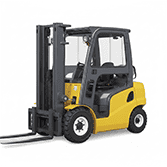
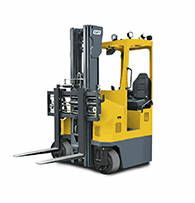
Training must match the equipment being used. A conventional counterbalance forklift course cannot automatically prepare somebody for every reach, pivot steer or telescopic truck. Operators need further instruction and assessment when equipment or working methods change.
A course certificate is evidence of training, not a government-issued forklift licence. The employer should decide whether the operator is competent for the work and provide clear written authorisation before independent operation.
Maintain Competence Through Supervision
Competence must be maintained after the initial course. Supervisors should recognise unsafe behaviour, correct it promptly and make sure site procedures are followed. Reassessment or refresher training may be appropriate after an accident or near miss, when unsafe habits appear, after a long break from driving or when the task changes.
There is no universal legal rule requiring refresher training at one fixed interval for every operator. The employer should base decisions on monitoring and risk. Staff responsible for standards may benefit from suitable forklift instructor training.
Rule 2: Inspect the Forklift Before Use
A short inspection can identify a defect before it contributes to an accident. Checks should follow the manufacturer’s instructions and the employer’s procedure rather than a generic list used for every truck.
Complete the Pre-Use Check
Operators commonly check the forks, carriage, mast, chains, hydraulics, tyres, wheels, steering, brakes, warning devices, lights and operator restraint. They should look for leaks, cracks, distortion, loose parts and signs of impact damage. Battery connections or fuel systems also require the checks appropriate to the truck.
Test operational items in a safe area before beginning normal work. The operator should understand what to inspect, what an acceptable condition looks like and how the result is recorded. Pre-use checks support planned inspection and maintenance, but they do not replace servicing or the thorough examinations required for relevant lifting components.
Report Defects and Take Unsafe Trucks Out of Use
Report any defect through the workplace procedure. If it could affect safety, the truck should not be used until a competent person has assessed and resolved the problem. A warning label, key control or isolation process can help prevent another operator unknowingly taking it.
Never continue because a fault appears minor or production is busy. Changes in braking, steering, lifting performance or warning systems may become more serious during a shift. Regular inspections and maintenance are duties under PUWER, while thorough examination is a separate legal requirement for applicable lifting equipment.
Rule 3: Drive at a Safe Speed With a Clear View
Safe driving should be smooth, controlled and appropriate for the conditions. Site speed limits are maximums, not targets. An operator must slow further when the route, load or people nearby increase the risk.
Control Speed and Steering
Reduce speed before corners, doorways, crossings, slopes, uneven floors and congested areas. Avoid sharp steering, harsh acceleration and sudden braking. These movements reduce control and may affect stability, especially when the truck is carrying a load.
Forklifts steer differently from cars, and the rear of the truck can swing out during a turn. Operators need adequate clearance from people, racking and structures. They should use the restraint system where one is fitted and follow the manufacturer’s instructions if an overturn begins rather than attempting to jump from the cab.
Keep the Route and Direction of Travel Visible
Look in the direction of travel and continue scanning for pedestrians, vehicles, obstructions and surface hazards. Slow down and use the horn where the site procedure requires it, including at blind corners. A warning device supports observation but never replaces it.
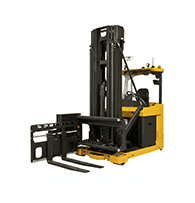
If the load obstructs the forward view, follow the method taught for that truck and workplace. This may involve travelling in reverse where safe and permitted, or using a trained banksman for a controlled manoeuvre. Narrow-aisle equipment such as a reach truck requires suitable training for its particular visibility and handling characteristics.
Rule 4: Handle Every Load Safely
A load changes the stability, visibility and stopping behaviour of a forklift. The operator must confirm that the truck, forks and any attachment are suitable before attempting the lift.
Stay Within the Rated Capacity
Check the load weight, dimensions and load centre against the truck’s capacity information. Attachments and lift height can reduce the capacity available. Never rely on guesswork or assume a load is safe because the truck managed a similar item previously.
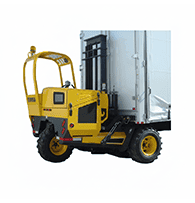
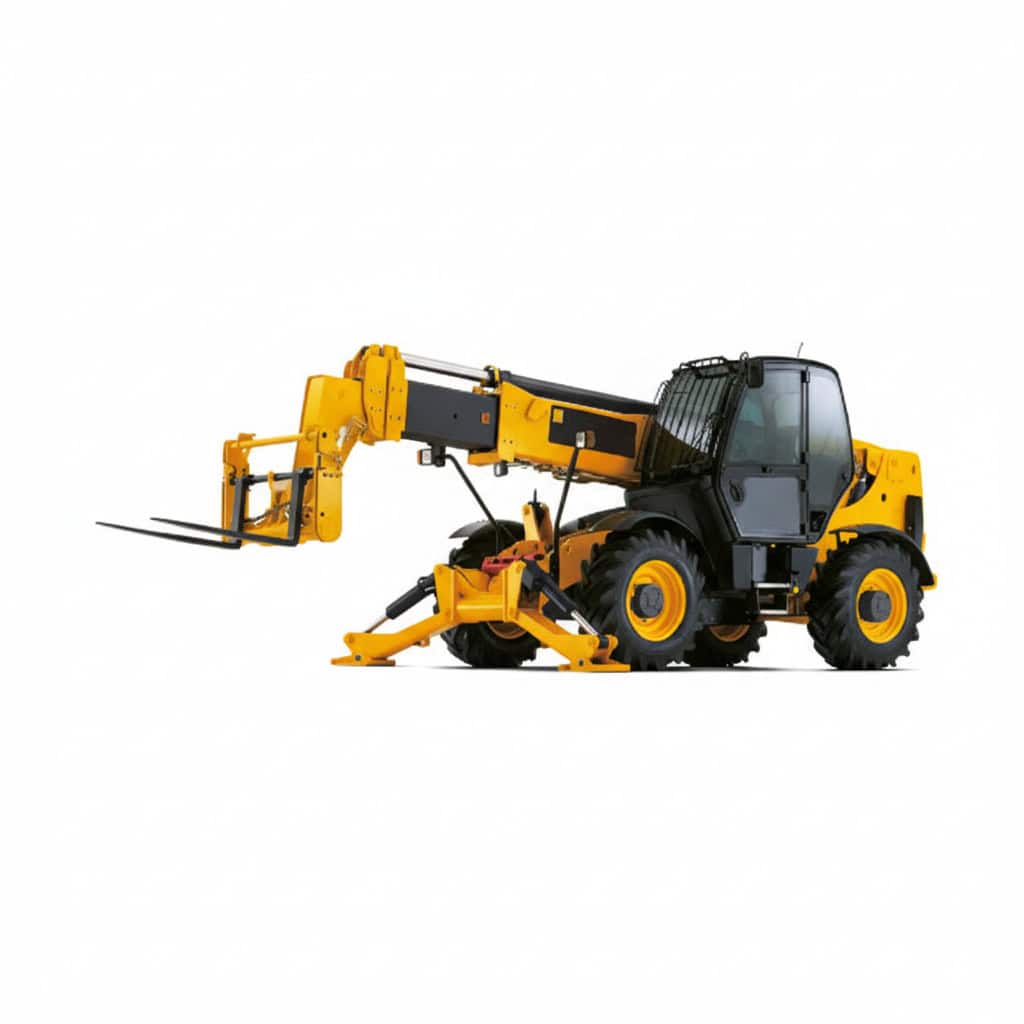
Inspect the pallet or load support for damage. Loose, leaning or unevenly distributed goods should be secured or restacked before movement. If the weight or stability is uncertain, stop and obtain reliable information. Different tasks may require specialist equipment, attachments or industrial Teletruk training.
Position the Forks and Travel With the Load Low
Space the forks correctly, insert them as fully as practicable and centre the load. Lift, tilt and lower smoothly. Check for beams, lights, door frames and other overhead obstructions before raising the mast. Nobody should stand or pass beneath raised forks or a suspended load.
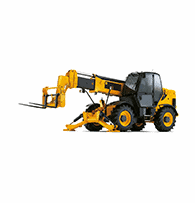
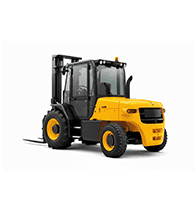
Carry the load as low as safely practicable while maintaining ground clearance. A raised load increases instability and may block the driver’s view. Follow the approved method for slopes and ramps, and do not turn across a slope. Outdoor or uneven terrain may call for suitable equipment and rough terrain telescopic handler training.

Rule 5: Protect Pedestrians and Follow Site Rules
Pedestrians and moving forklifts should be physically separated wherever reasonably practicable. Operators must stay within designated routes, respect crossings and stop when people enter an unsafe area.
Site rules should also cover loading bays, parking, keys, charging, refuelling and communication with visiting drivers.
Maintain Separation From Pedestrians
Use vehicle routes and keep out of pedestrian-only areas. Approach crossings and doorways at a controlled speed, checking that the route is clear before proceeding. Never drive towards somebody standing between the truck and a wall, racking or another fixed object.
Barriers, marked walkways, controlled crossings and restricted access reduce reliance on people noticing every movement. Eye contact, blue lights and alarms may help, but they are not substitutes for effective separation. Where a banksman is required, signals and responsibilities must be agreed. Suitable banksman training can support controlled vehicle movements.
Park and Secure the Truck Correctly
At the end of use, park in the designated area on firm, level ground where possible. Lower the forks, place the controls in the safe position, apply the parking brake and switch off the power. Remove or secure the key or access device to prevent unauthorised use.
Do not park where the truck blocks an emergency exit, pedestrian route or fire equipment. Charge or refuel only in the designated area using the approved procedure. Report any new damage or unusual behaviour before handing the truck over.
Applying the 5 safety rules for forklifts requires cooperation between operators, supervisors and employers. Training cannot correct a badly designed route, and barriers cannot compensate for an untrained driver. FT4U provides practical forklift operator training for individuals and businesses. You can also contact FT4U to discuss the truck categories and course options appropriate for your workplace.
Frequently Asked Questions
What Is the Most Important Forklift Safety Rule?
No single rule can control every risk. Only trained, competent and authorised operators should use a forklift, but they also need safe equipment, suitable routes, stable loads and effective pedestrian separation. These controls work together, so removing one can undermine the others.
Do Forklift Operators Need a Licence in the UK?
There is no government-issued forklift licence equivalent to a driving licence. Employers must ensure operators receive adequate training and are competent for the equipment and work. They should then authorise those operators before independent use. A training certificate helps demonstrate completed training but does not remove the employer’s responsibilities.
Should a Forklift Be Checked Every Day?
Essential pre-use checks should normally be completed at the start of the working period or shift, following the manufacturer’s instructions and workplace procedure. The exact items vary by truck. These checks do not replace planned maintenance, formal inspection or thorough examination.
Can a Forklift Carry Passengers?
A passenger should not ride on a forklift unless the truck has a properly designed passenger seat and the employer’s safe system permits it. Nobody should ride on the forks, load or an improvised platform. Purpose-built access equipment should normally be used when work at height is planned.
How Can Employers Improve Forklift Safety?
Employers should assess the risks, choose suitable trucks, maintain equipment, plan traffic routes, separate pedestrians, provide training and supervise the work. Near misses and defects should be investigated rather than ignored. Regular monitoring helps ensure the 5 safety rules for forklifts continue to work in everyday conditions. Appropriate forklift safety training supports this system but does not replace safe workplace design.




