



What Is the Most Common Forklift Accident?
Forklifts are essential in warehouses, yards and factories, but their weight, restricted visibility and close interaction with people create serious risks. Among the common forklift accidents seen in UK workplaces, incidents in which a moving forklift strikes a pedestrian are repeatedly highlighted as a major concern.
There is no single national table that ranks every forklift accident across every industry. However, Health and Safety Executive guidance consistently identifies people being hit, run over or crushed by workplace vehicles as a leading danger. HSE figures for the food and drink industry, for example, show that being struck by a forklift accounted for 26% of workplace transport injuries in the data cited.
This article explains why pedestrian collisions happen, which other incidents are common and what employers and operators can do to reduce the risks.
Key Takeaways
- Forklifts striking pedestrians are among the most common and serious forklift accidents.
- Reversing, blind spots and poorly separated traffic routes frequently increase the risk.
- Overturns, falling loads and collisions with racking or vehicles are also significant hazards.
- Safe premises, suitable equipment and effective procedures are all essential.
- Operators need appropriate training, site familiarisation, authorisation and supervision.
- Near misses should be taken seriously because they can reveal weaknesses before someone is injured.
What Is the Most Common Forklift Accident?
The most defensible general answer is a forklift striking a pedestrian. A person may be knocked down, run over or trapped between the truck and a wall, vehicle, loading bay or item of equipment.
The exact pattern varies between industries and individual sites. A busy distribution centre will not have the same layout or risks as a builder’s merchant, farm or manufacturing plant. Even so, pedestrian and vehicle interaction appears repeatedly in HSE workplace transport guidance and enforcement cases.
Forklifts often work near people picking stock, checking deliveries or walking between work areas. A moment of poor visibility or confusion can have severe consequences.

Forklifts Striking Pedestrians
Pedestrian collisions often happen while a forklift is reversing, turning, leaving an aisle or moving around a loading area. The operator may not see someone approaching from behind stored goods, a doorway, another vehicle or the end of racking.
The pedestrian may assume the operator has seen them. Eye contact, warning lights and alarms can help, but none should replace physical separation and a well planned traffic system.
HSE workplace transport guidance advises workplaces to examine how vehicles and people move around the site, identify where their routes interact and reduce that contact. Barriers, marked walkways, controlled crossing points and clearly managed loading areas can all form part of the solution.
See FT4U’s forklift safety information.
Why Pedestrians Are Particularly Vulnerable
A forklift is compact but very heavy. It can turn tightly and its rear end swings out in the opposite direction to the turn. This movement can catch somebody standing too close, particularly where space is limited.
Visibility also changes according to the truck, load and direction of travel. A large load may obstruct the operator’s forward view. Masts, overhead guards and the workplace itself create further blind spots. Pedestrians have no protective cab, restraint or structure around them, leaving them exposed to crushing injuries.
Visitors and delivery drivers may not know the site’s rules. Everyone entering an operational area needs clear information and a safe place to wait or walk.
What Other Forklift Accidents Are Common?
Pedestrian strikes deserve close attention, but they are not the only danger. A proper risk assessment must consider the equipment, tasks, loads, environment and people present rather than focusing on a single accident type.
Forklift Overturns
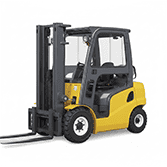
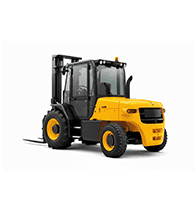
Counterbalance forklifts can overturn when cornering too quickly, travelling across a slope, driving over an edge or uneven surface, or handling an unsuitable or unstable load. Raised loads affect stability, while sudden movements can make matters worse.
Overturns are not necessarily the most frequent forklift incident, but they can be especially severe. HSE guidance on overturning states that vehicle overturns account for nearly 1 in 5 deaths in workplace transport accidents, with forklift trucks among the vehicles particularly prone to overturning.
Where a truck has a restraint system, the operator should use it. Jumping from an overturning forklift can place the operator in its path. Site conditions and the manufacturer’s instructions must be considered before work begins.
Falling or Unstable Loads
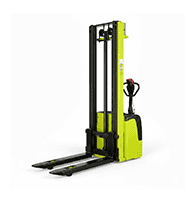
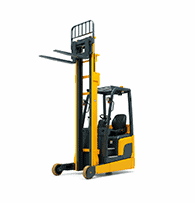
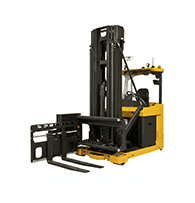
During reach truck operations, a load can fall because it is damaged, poorly stacked, unsuitable for the forks or handled beyond the truck’s capacity. Incorrect fork spacing and lifting a load that is not properly secured can also cause instability.
Nobody should stand or pass beneath raised forks or a suspended load. Exclusion zones may be needed during certain loading tasks. Operators must understand the truck’s capacity information and know how the load centre, attachments and lift height can affect safe handling.
Racking damage should be reported promptly. A small impact may weaken a structure and create a later collapse risk.
Collisions With Vehicles, Racking and Structures
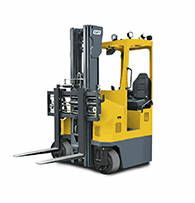
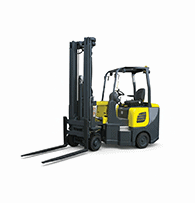
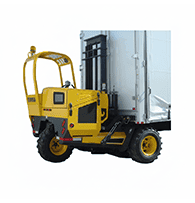
Forklifts, including pivot steer trucks, can collide with delivery vehicles, other lift trucks, doors, columns, overhead obstructions and storage systems. These incidents may injure people directly or create secondary dangers such as falling stock, damaged equipment or blocked emergency routes.
Repeated minor impacts may reveal narrow routes, poor lighting, unsuitable speed limits or weak supervision.
What Causes Common Forklift Accidents?
Most accidents involve several contributing factors. Focusing only on the operator may leave wider workplace or management problems unresolved.
Poor Visibility and Inadequate Traffic Separation
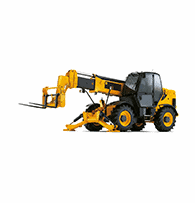
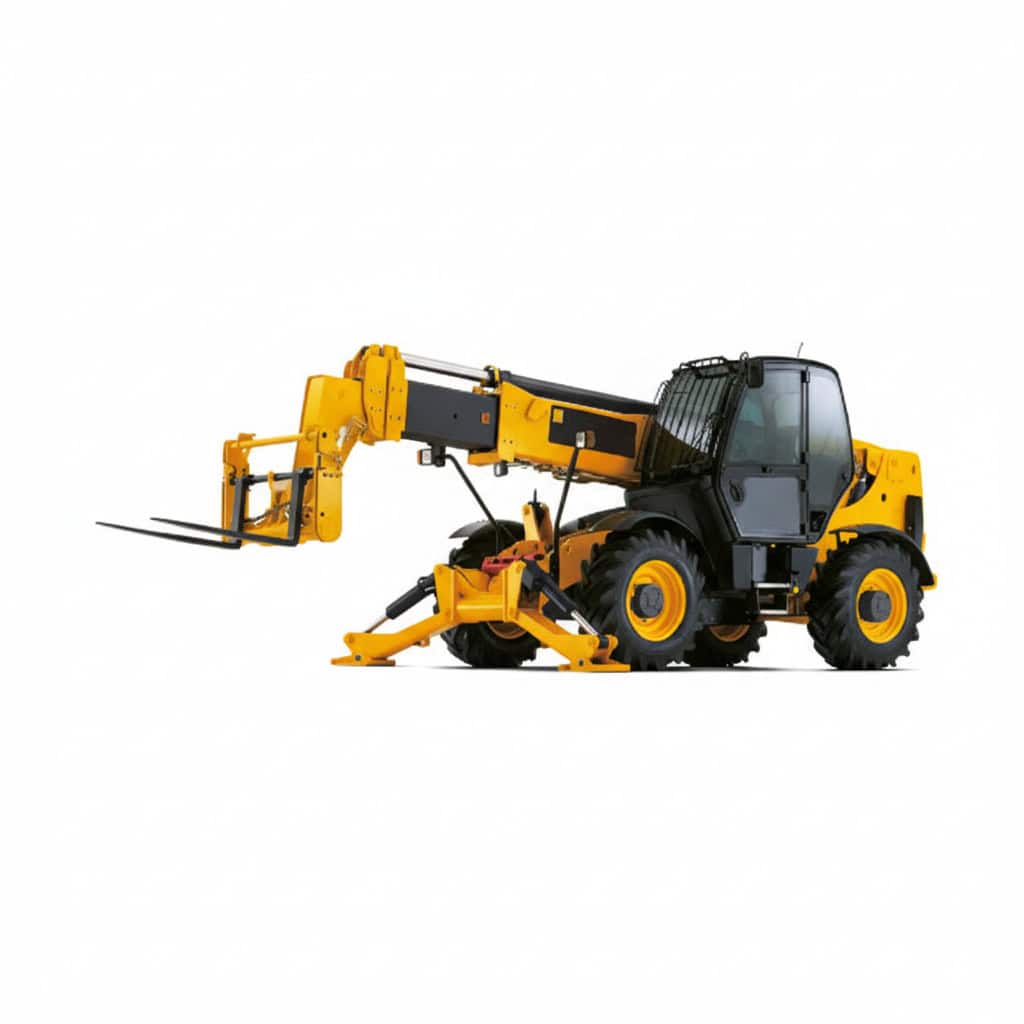
An industrial Teletruk has its own visibility considerations.
Blind corners, cluttered aisles, badly positioned stock and poor lighting can prevent operators and pedestrians from seeing one another. Reversing becomes more hazardous when there is no room to turn safely or when people routinely enter the same area.
A workplace transport plan should show vehicle routes, pedestrian walkways, crossings, loading areas and one way systems where appropriate. Routes must work in practice. Staff should not have to leave a walkway because equipment is blocking it.
Mirrors, signs, lighting and warning systems may help manage remaining risks, although physical separation is stronger than relying on everybody to notice a warning.
Speed, Unsafe Loads and Poor Floor Conditions
Driving too quickly reduces the time available to react and can affect stability when turning. A speed that seems modest in an open yard may be unsuitable inside a congested warehouse or near a doorway.
Wet surfaces, potholes, debris and loading bay edges can contribute to loss of control. Traffic routes should remain suitable for the vehicles using them.
Loads need to be stable, within capacity and positioned correctly. Pressure to move goods quickly must never encourage operators to carry loads that obstruct safe travel without following the appropriate procedure, take shortcuts or use unsuitable equipment.

Who Is Most at Risk During a Forklift Accident?
Pedestrians are particularly exposed, but operators are also at risk from overturns, falls while getting on or off, unsecured loads and collisions. Warehouse staff, contractors, cleaners, visiting drivers and members of the public may all enter areas where trucks operate.
New starters and visitors may be unfamiliar with local rules. Experienced staff can also become too comfortable around routine movements and cross a route without checking.
Employers should consider everyone who could be affected, including people who do not normally work in the area.
Accidents may also distress colleagues, disrupt operations and create further hazards through damaged equipment or stock.
How Can Forklift Accidents Be Prevented?
Effective prevention combines a safe workplace, suitable vehicles, competent people and active management. Training cannot compensate for a route that forces pedestrians and forklifts together.
Safe Traffic Management and Workplace Controls
Begin with a suitable and sufficient risk assessment covering normal work and less frequent activities. Observe movements at busy times and speak to the people doing the work.
Controls may include:
- Separate pedestrian and vehicle routes
- Barriers at higher risk locations
- Clearly marked crossings and waiting areas
- One way systems or restricted access
- Suitable lighting and maintained floor surfaces
- Site speed limits based on the actual risks
- Safe loading and unloading arrangements
- Daily checks and planned maintenance
- A clear process for reporting defects and near misses
Lift trucks must be suitable, maintained and used correctly under PUWER. Lifting parts and associated equipment may also require thorough examination under LOLER. These duties are separate from routine checks and servicing.
Suitable Training, Familiarisation and Supervision
Operators should receive suitable basic training for the truck category, followed by job training and workplace familiarisation. Their employer should authorise them before they operate equipment. A certificate is evidence of training, not a government issued forklift licence.
Supervisors need enough knowledge to recognise unsafe practice and intervene. Suitable forklift instructor training supports operator standards. Refresher training may be appropriate after an accident or near miss, when poor practice is observed, following a change of equipment or workplace, or when skills have not been used for some time.
Learn more about FT4U. FT4U provides practical forklift operator training for individuals and businesses, including accredited courses where applicable. Training should match the equipment and work being performed.
What Should Happen After a Forklift Accident?
The immediate priorities are to stop work, prevent further harm and arrange first aid or emergency assistance. The area and damaged equipment should be made safe without disturbing evidence unnecessarily.
The incident should be recorded and investigated to establish what happened and why. This includes examining route design, supervision, equipment condition and communication. Near misses deserve a similar response.
Employers must determine whether an incident is reportable under RIDDOR. Reportability depends on the circumstances and outcome. Certain specified injuries, fatalities and dangerous occurrences must be reported, while an injury causing more than 7 consecutive days of incapacity is reportable within the required period. HSE explains the current reporting and recording thresholds in more detail.
Risk assessments, traffic plans and working procedures should be reviewed after the investigation. Any necessary changes must be communicated clearly and checked to ensure they work.
Frequently Asked Questions
What Is the Most Common Cause of Forklift Accidents?
There is rarely only 1 cause. Common contributing factors include inadequate separation of pedestrians and vehicles, poor visibility, excessive speed, unsuitable loads, weak supervision and inadequate training or familiarisation. The correct cause can only be established by examining the particular incident and workplace.
What Is the Most Serious Type of Forklift Accident?
Pedestrian crushing incidents and forklift overturns can both cause fatal or life changing injuries. Falling loads can be equally serious. Risk should therefore be judged by both the likelihood of an incident and the severity of its possible outcome.
How Can Pedestrians Stay Safe Around Forklifts?
Pedestrians should use designated walkways and crossings, follow site rules and avoid entering an operating zone unless permitted. Never assume an operator has seen you. Employers remain responsible for organising the workplace safely and should not depend on pedestrian awareness alone.
Can Forklift Training Help Prevent Accidents?
Yes. Suitable forklift training helps operators understand the equipment, stability, load handling, observation and safe operating principles. It must be supported by site familiarisation, competent supervision, maintained equipment, a suitable risk assessment and properly designed traffic routes.
Contact FT4U for help choosing suitable training.




